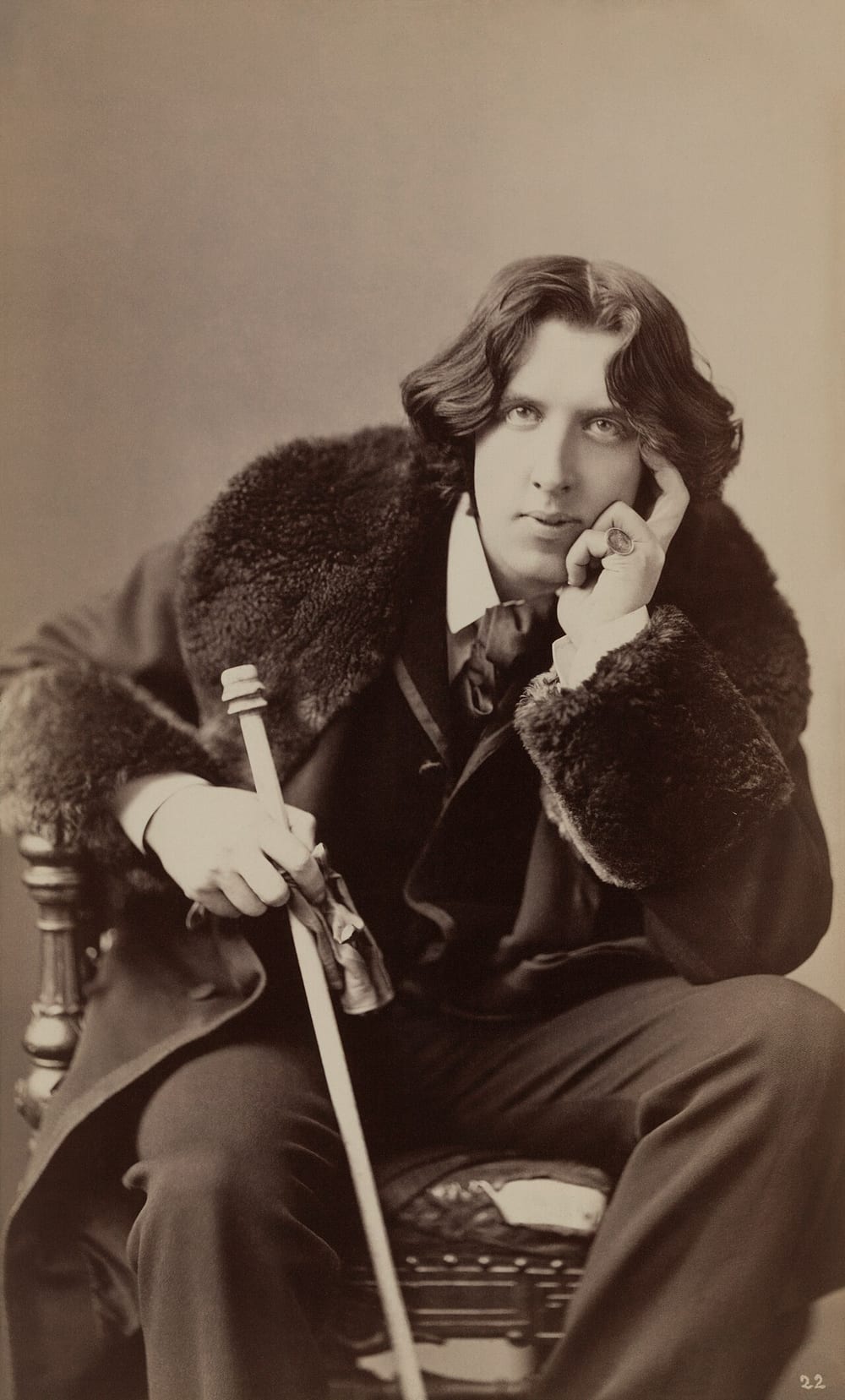
Oscar Wilde's lecture tour of the United States in 1882 is well known and often mentioned, and hardly a footnote. It was a considerable commercial success, and the stories of him endearing himself to audiences from Colorado miners upwards are standard. What has received less attention is the deluge of vitriol and criticism he received from the press wherever he went.
The Eagle takes aim
In a piece in the Brooklyn Eagle in January 1882 entitled "Mr Wilde's Thrilling Legs", Wilde, "estheticism", the British aristocracy and Britain itself were ridiculed and reviled in a way that was fairly typical of the newspapers' response.
Beginning with his appearance, it noted that "this intense young" man was well known for "a habit of wearing very decollete shirts, and exposing to an extent considered at least unconventional, the snowy whiteness of his chest, but it was not expected that he would abbreviate his nether garments to any extent in order to display the symmetrical beauty of his legs". His enlarged "lappels", knee breeches, black silk stockings and silver buckles had the desired effect on the "rapturous maidens of both sexes whose eager eyes danced from his legs to his beautiful throat and back again". This, the Eagle commented, "undoubtedly afforded a rich treat, overwhelming their most disordered and extravagant anticipations by his revelations of carnal beauty".
Cupids and a sunflower
The reporter was less overwhelmed than the audience, whether by the orator or the set. Of the set he noted: "The walls were of pink, relieved with preposterous Cupids indulging in impossible feats of agility and marksmanship. From an antique bronze pitcher placed upon an ebony a sunflower of unhealthy appearance rose above a collection of choice ferns and grasses." He seemed even less impressed by Wilde himself, who "read in a dull monotone, failing of emphasis, neglectful of his periods and drawling altogether as if he had been down the road or somewhere else and caught a bad cold".
From an antique bronze pitcher placed upon an ebony a sunflower of unhealthy appearance rose above a collection of choice ferns and grasses.
The pleasant vices of Rome
The Eagle made much of Wilde as a reflection of the dissolution and decline of those living on the other side of the Atlantic. Convinced that he was a "sincere flamboyant imbecile" rather than the "keen witted satirist" his agents marketed, it found the explanation in a British aristocracy whose minds were "enfeebled with generations of wantoness and idleness" and whose "worn out, exhausted natures concentrate themselves on the languid adoration of formal beauty". This need for a cult of beauty, the Eagle proclaimed, was met by the "Swinburnes, Rossettis, Burne Jones and a pack of people who are never happy unless they are reading erotic verses or looking at the bare arms and legs of professional beauties". The pleasant vices of Rome, it said, were being revived in Europe.
Wilde was therefore a symptom of all this, a charlatan and a boor who "has come across the water to scoop in the dollars of credulous and curious Americans". Noting that the "fervidly fervid" response of the audiences was "too too" and "utterly utterly" silly, the Eagle looked forward to Mr Wilde's eventual departure, "on his well developed calves", for Australia, hopefully never to return.
Notes & questions
- What did the Brooklyn Eagle say about Oscar Wilde in 1882?
- In a January 1882 piece headed "Mr Wilde's Thrilling Legs" it mocked his knee breeches and silk stockings, called his delivery a dull monotone, judged him a "sincere flamboyant imbecile", and read him as a symptom of an idle, decaying British aristocracy.
Sources
First published December 31, 2012, kept and lightly revised September 16, 2026. On how this journal is rebuilt and sourced, see the about page.
Related reading
- Hatch, Victorian Villain or Forgotten Hero New Zealand
- Foundation Footnote: John De Morgan People
- On this day… December 29th 1871 On this day
- The Staten Island Cricket and Baseball Club Staten Island